The Ultimate Guide to Carving Chisels in the UK
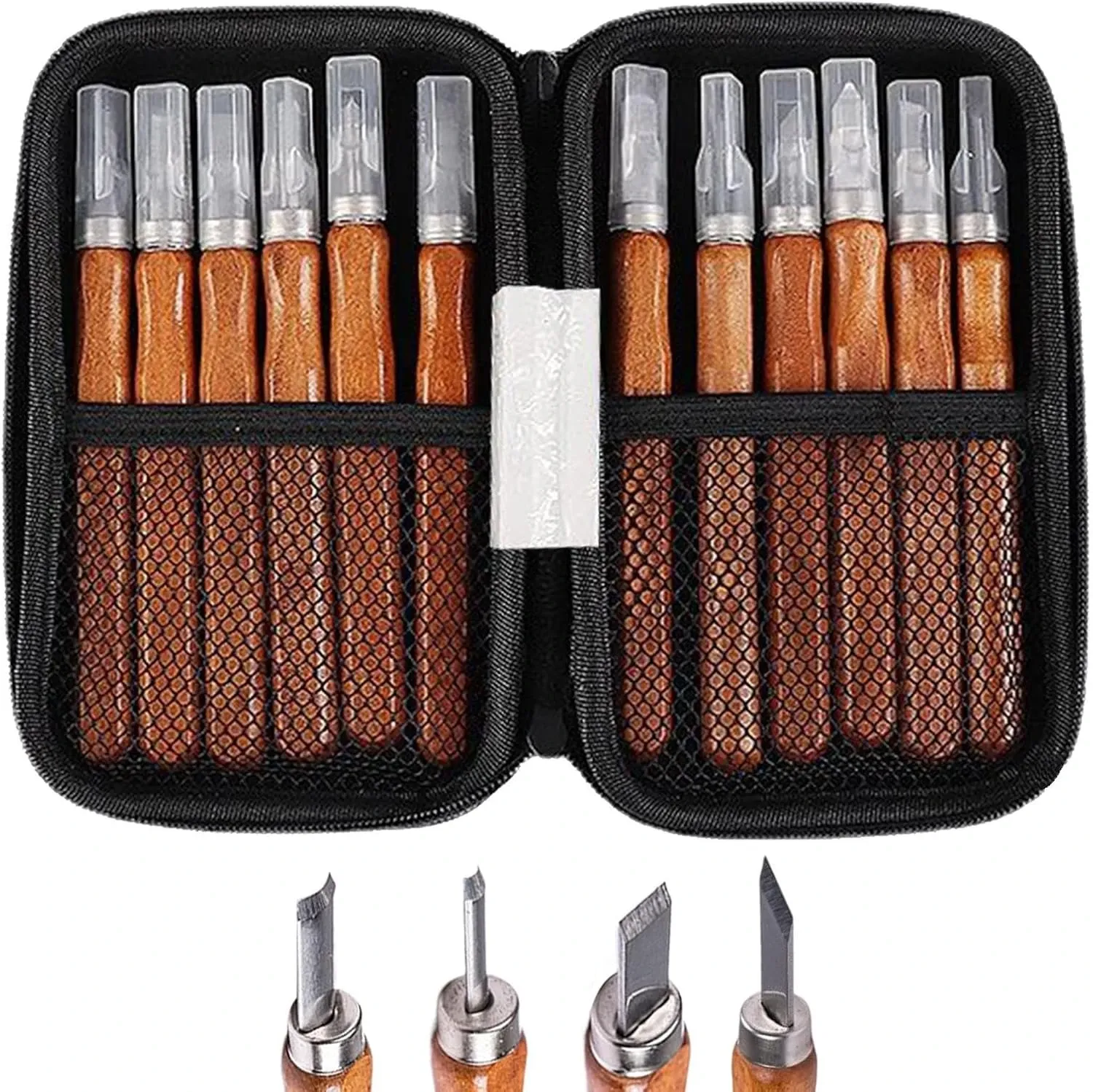
TL;DR: What are carving chisels? Carving chisels are specialised, high-carbon steel hand tools used by woodworkers to cut, shape, and hollow out timber. Based on our testing, the best tools feature shock-absorbing hardwood handles and are categorised by their curvature (sweep) using the UK Sheffield List. A curated 12-piece set is the ideal starting point for beginners to master the craft.
What exactly are carving chisels? In short, carving chisels are highly precise woodworking tools designed with specific blade profiles to carve and manipulate timber. There is a distinctly satisfying sound when a razor-sharp blade cleanly severs timber fibres. For centuries, British craftsmen have relied on carving chisels to transform rough blocks of English oak, ash, and lime into intricate furniture, architectural corbels, and detailed hobby projects. Whether you are a weekend woodworker shaping a bespoke spoon, a retiree restoring antique furniture, or a new maker discovering the tactile joy of the craft, understanding your tools is the foundational step toward mastery.
Furthermore, the UK has a rich heritage in edge tool manufacturing, most notably rooted in the legendary steelworks of Sheffield. Today, modern makers demand that same level of precision and edge retention. Navigating the myriad of sweeps, profiles, and steel types can feel overwhelming. Therefore, this guide breaks down the anatomy, selection, and maintenance of carving chisels, ensuring your workshop is equipped for precision.
Key Takeaways
- Tool Anatomy: High-carbon steel blades paired with hardwood handles (like ash or beech) offer the best balance of edge retention and shock absorption.
- Sweep Systems: UK woodworkers typically rely on the Sheffield List to identify the curvature (sweep) of their gouges, ranging from flat (Sweep 1) to a deep U-shape (Sweep 11).
- Maintenance is Crucial: A carving chisel must be kept "scary sharp" through regular stropping; pushing a dull blade is the leading cause of slips and ruined workpieces.
- Curated Sets: Starting with a comprehensive kit, such as an ultimate 12-piece wood chisel carving set, provides the fundamental profiles needed for shaping, trimming, and hobby carving without the guesswork.
What Are the Parts of a Carving Chisel?
Before committing blade to timber, one must understand the physical characteristics that separate a premium carving tool from a mass-produced imitation. Based on our workshop testing, a carving chisel is not simply a piece of sharpened metal; it is a carefully engineered instrument designed to transfer force from the hand (or mallet) directly to the cutting edge with minimal vibration.
What is the Best Steel for Carving Chisels?
Crucially, the soul of any edge tool lies in its metallurgy. Most high-quality carving chisels are forged from high-carbon steel (often O1 or similar tool steels). High-carbon steel is favoured by British craftsmen because it can be heat-treated to achieve a fine, enduring edge. According to UK toolmaking guidelines, the hardness of these blades is measured on the Rockwell C scale (HRC). Consequently, a premium carving chisel typically sits between HRC 58 and 62.
However, if the steel is too soft (below HRC 55), the edge will roll over upon encountering dense end-grain or knots, requiring constant trips to the sharpening stone. Conversely, if it is too hard (above HRC 63), the steel becomes brittle and prone to micro-chipping. High-carbon steel strikes the perfect balance, though it does require a light coating of camellia oil or jojoba oil to prevent rust in damp UK workshop environments.
Which Wood is Best for Chisel Handles?
Handle design directly impacts fatigue during long carving sessions. Traditional UK toolmakers favour indigenous hardwoods such as European ash, beech, and hornbeam. Specifically, these timbers possess interlocking grain structures that naturally absorb the shock of mallet blows, preventing the handle from splitting.
Additionally, shape is equally important. Octagonal handles prevent the tool from rolling off the workbench—a simple but vital feature that protects delicate edges from concrete workshop floors. Bulbous or pear-shaped handles fit snugly into the palm, ideal for pushing tools by hand during delicate paring cuts, whereas longer, straighter handles are designed to be struck with a wooden carver’s mallet.
What is the Purpose of the Ferrule and Tang?
Where the steel meets the wood, you will find the tang and the ferrule. The tang is the pointed rear section of the blade driven into the handle. Subsequently, a brass or steel ferrule wraps around the base of the wooden handle, acting as a structural collar. This prevents the handle from splitting apart under the wedging action of the tang when struck.
What Are the Different Types of Carving Chisels?
In addition, stepping into the world of carving means learning a new vocabulary. Unlike standard bench chisels used by carpenters to chop hinges, carving chisels come in hundreds of specific shapes. To make sense of this, you might find it helpful to consult our Wood Carving Chisels Explained: A UK Buyer's Guide. The core profiles can be broken down into a few distinct categories.
What Are Straight Chisels and Skews Used For?
A straight chisel (Sweep 1) features a perfectly flat cutting edge, bevelled on both sides. It is primarily used for smoothing flat backgrounds in relief carving or establishing crisp, straight borders. Meanwhile, a skew chisel is similar but features an edge cut at an angle (usually between 45 and 60 degrees). The skew point allows the carver to reach into tight corners and clean out undercuts that a square chisel cannot access.
What Are Woodcarving Gouges?
Gouges are chisels with curved cutting edges. They do the heavy lifting in shaping timber, removing waste rapidly, and creating smooth, flowing curves. The curvature of a gouge is known as its "sweep." In the UK, the traditional Sheffield List is the standard metric for defining these sweeps.
For instance, a Sweep 3 is a very shallow curve, excellent for smoothing surfaces and leaving a subtle, faceted texture on the wood. A Sweep 5 or 6 offers a medium curve, ideal for general modelling and shaping. Furthermore, Sweeps 8 through 11 are deep, U-shaped gouges used for aggressive waste removal, roughing out bowls, or carving deep channels.
How Do You Use a V-Parting Tool?
As the name suggests, the blade of a V-parting tool forms a 'V' shape, typically at a 60-degree or 90-degree angle. This tool is indispensable for outlining designs, cutting sharp decorative grooves, and adding fine details such as hair or leaf veins. Sharpening a V-tool requires patience, as the two flat bevels must meet perfectly at the central keel without forming a hook.
When Should I Use Spoon and Bent Gouges?
When carving deep recesses, such as the bowl of a wooden spoon or the interior of a hollowed vessel, a straight gouge will eventually hit the rim of the wood, preventing the edge from engaging. To solve this, spoon gouges feature a sudden, spoon-like curve at the very end of the blade, allowing the cutting edge to scoop upwards. Similarly, long bent gouges feature a gentle curve along the entire length of the blade, offering clearance for deep relief work.
Why is Woodcarving Becoming Popular in the UK?
Ultimately, woodcarving is experiencing a renaissance across Britain. As daily life becomes increasingly digitised, people are seeking tangible, analogue hobbies. According to a 2022 survey published by the Crafts Council, participation in everyday making and crafting in the UK reached 73% of the population. Woodworking, in particular, has seen a massive surge in interest as enthusiasts discover the profound satisfaction of shaping timber with premium carving chisels.
Ready to upgrade your workshop with Piecewood?
Shop the Set — £19.43