Wood Carving Chisels Explained: A UK Buyer's Guide
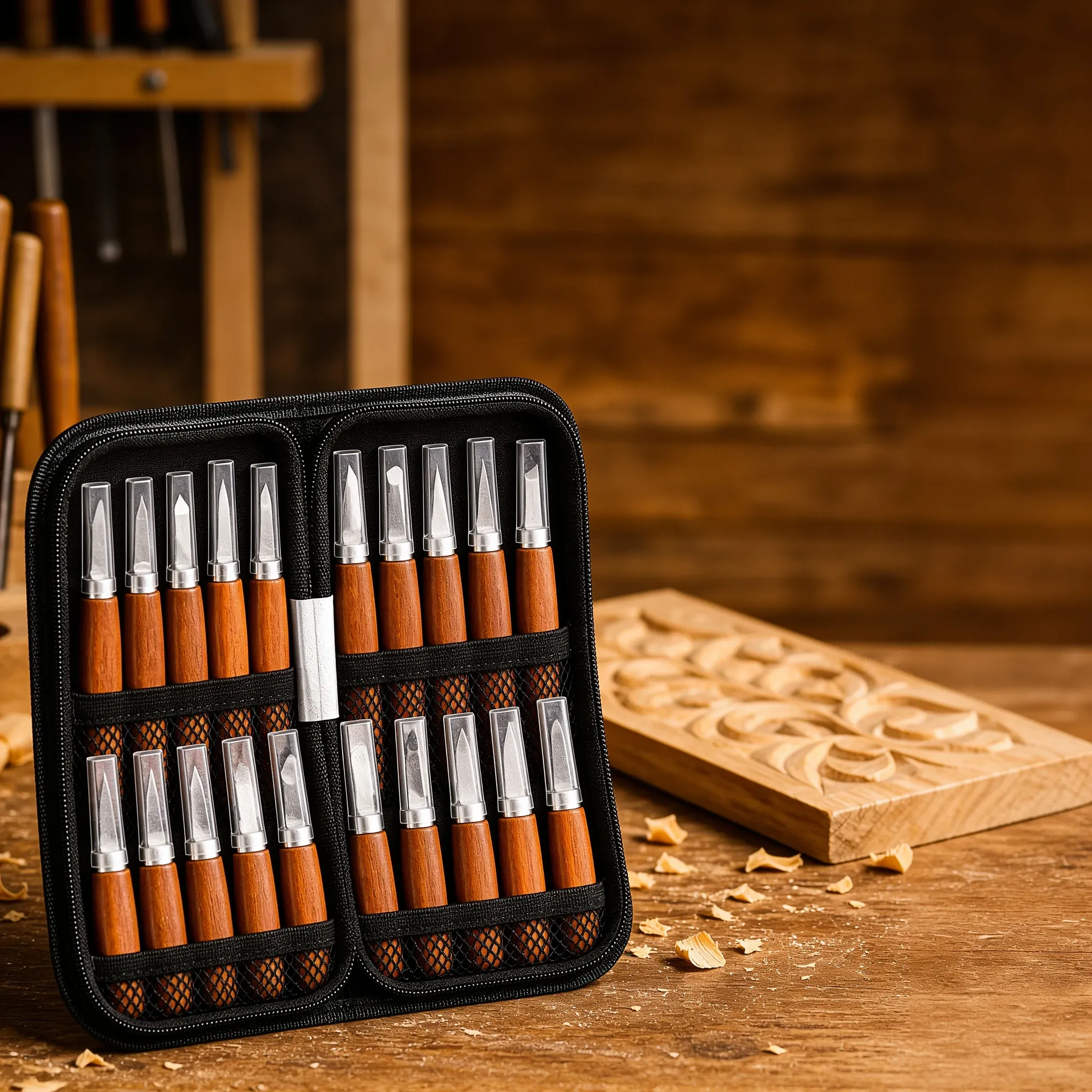
Wood carving chisels are specialist hand tools designed for shaping, hollowing, trimming and detailing wood with more control than standard woodworking chisels. If you are choosing a set in the UK, the best option is usually one with a practical mix of straight chisels, gouges and detail tools, plus comfortable handles, reliable steel and safe storage.
TL;DR: If you want wood carving chisels for hobby carving, relief work or decorative shaping, choose a set with several blade profiles rather than lots of near-identical widths. Based on our testing of carving tools in typical workshop use, edge retention, handle comfort and control matter more than buying the biggest set. For UK buyers, a well-organised boxed set is often the simplest and best-value starting point.
Choosing the right wood carving chisels can be the difference between a clean, controlled cut and a frustrating session spent fighting the grain. For UK hobbyists, improvers and gift buyers, the challenge is not a lack of choice but too much of it: bench chisels, carving gouges, skew chisels, straight blades, palm tools, mallets, storage boxes and steel grades all compete for attention.
This guide makes that choice simpler. It explains what wood carving chisels are, how they differ from standard woodworking chisels, which shapes matter in real workshop use, and what to look for before you buy in the UK. In addition, it draws on practical considerations such as edge retention, comfort in the hand, safe control and storage.
For readers comparing categories more broadly, see The Ultimate Guide to Carving Chisels in the UK, which gives a wider overview of carving tools and uses.
Key takeaways
- Wood carving chisels are made for shaping, trimming and detail work rather than straight joinery cuts alone.
- A beginner-friendly set should include a useful spread of straight chisels, gouges and finer detail profiles.
- Sharpness, edge geometry, handle comfort and safe storage matter more than simply buying the largest set available.
- For many UK buyers, a curated set in a wooden box offers better value and easier organisation than buying mismatched tools one by one.
- Safe carving matters: using the correct profile for the cut improves both finish quality and control.
What are wood carving chisels?
Wood carving chisels are hand tools used to remove timber in a controlled way for shaping, trimming, detailing and decorative work. Unlike general-purpose bench chisels, which are often aimed at joinery tasks such as paring or chopping hinges, carving chisels are made to follow curves, remove fine shavings and produce shaped cuts with precision.
In practice, the term covers several blade profiles. Some are flat and straight for levelling and trimming. Others are curved, known as gouges, for scooping material out of hollows and contours. You may also see V-tools for incised lines and texture, skew chisels for awkward angles and narrower tools for detail work.
If you are buying for hobby carving, spoon carving, whittling-adjacent projects, relief carving or light shaping, a dedicated wood carving chisel set is usually more useful than a standard builder's chisel set. That is because carving needs variety in profile rather than just variety in width.
For a broader comparison between categories, Wood Chisel Set Explained: A UK Buyer's Guide is a useful companion read.
Why do the right wood carving chisels matter?
Many beginners assume any sharp chisel will do. However, tool shape affects both finish quality and safety. A flat chisel pushed into a curved recess can skid. A bulky handle can make detail work clumsy. Likewise, a poorly sharpened edge forces extra pressure, which increases the risk of slips.
This is not a minor issue. According to guidance widely referenced by UK safety bodies such as RoSPA and HSE principles around hand-tool use, poor technique and unsuitable tools can contribute to avoidable workshop injuries. Good tool choice does not replace safe practice; nevertheless, it supports safer control.
That is one reason many experienced makers prefer a well-selected set over random single purchases. A sensible range of profiles helps you use the correct edge for the cut in front of you instead of forcing one tool to do every job badly.
What types of wood carving chisels do you need?
When shopping for wood carving chisels in the UK, you will usually come across a few core types. Understanding these shapes helps you judge whether a set is genuinely versatile or simply padded out with duplicates.
What is a straight wood carving chisel used for?
Straight chisels have a flat cutting edge and are useful for trimming shoulders, flattening small areas and making clean paring cuts. They are often the most familiar shape to beginners; however, they still play an important role in carving sets for tidying edges and refining surfaces.
What is a gouge used for in wood carving?
Gouges have a curved cutting edge and are central to many carving tasks. Shallow gouges suit gentle hollows and shaping. Deeper gouges remove material from tighter curves and recesses. As a result, a set with several sweeps gives far more flexibility than one made up mostly of straight blades.
What are V-tools and parting tools used for?
These tools cut narrow channels, crisp lines and decorative detail. They are useful for lettering, outlining forms and creating texture. Not every beginner needs several of them at once; even so, at least one can add genuine versatility to a rounded kit.
What is a skew chisel used for in wood carving?
Skew chisels have an angled edge that helps with precise slicing cuts, corners and hard-to-reach areas. They can be especially useful in decorative work where a straight chisel would struggle to enter cleanly.
What are detail and veining tools used for?
These narrower profiles are intended for finer work such as facial features, leaves, borders, grooves and light patterning. In many cases they are what takes a project from rough-shaped to properly finished.
Are wood carving chisels different from standard woodworking chisels?
This is one of the most important buying distinctions. Standard woodworking chisels are often built for joinery and site-style tasks: chopping waste, cleaning recesses and paring straight lines. They are usually more robust, often wider and less varied in profile.
Wood carving chisels, by contrast, are designed around control and shaping. Their blade profiles are more specialised and their handles are often chosen for comfort during longer periods of hand-guided work. Therefore if your main goal is shaping small projects or decorative timber work rather than joinery alone,a woodworking set may feel limited.
Readers comparing the overlap between these tool families may also want to see Woodworking Chisel Set Explained: A UK Buyer's Guide.<
How do you choose wood carving chisels in the UK?
sorryReady to upgrade your workshop with Piecewood?
Shop the Set — £19.43